
Showing posts with label self-doubt. Show all posts

Saturday, 13 May 2017

What Are You Searching For?


I have not yet met anyone in my world travels who didn't want a little more inner peace. And, I have never encountered anyone who would trade a little money to rid themselves of their stress and worries.

So, is this what each of us is secretly or overtly searching for? Well, to be truthful I'm not sure. People who say they want less stress continue to pursue wealth, fame, power, position and more stuff. People who say they want to be happy often seem to sabotage this goal with poor choices, bad judgment and emotional immaturity. And people who say they want more inner peace still harbor old emotional baggage, replay old slights and hurts and let other people control their behaviors, attitudes, emotions and even their thoughts.

If we are truly searching for any or all the items listed above one would have to wonder whether we are just giving lip service to these goals, desires and dreams or if we really want them but just don't seem to know where to find them, how to achieve them or how to keep them.

I too have been guilty. I am just like you in that I would like a little more happiness and a little less stress yet when it comes to doing what is necessary I often fall short.

Sure, I have read all the books, hundreds and hundreds of them, attended the seminars, had personal coaches, spent hours and even weeks setting and planning my personal goals and dreams and spent more hours than I can remember praying and meditating and yet, here I sit from time to time, still questioning whether all this reading, study and searching is worthwhile.

During my years of study, research and searching I have come to a few conclusions.

1) Many of the people who supposedly have it figured out, don't. 
2) Many of the people who preach and teach this stuff to others and get paid handsomely to do so, don't have a clue. 
3) Some of the people who you would least expect to have the answers often do. 
4) Even many of the religious fanatics, diehards or steadfast believers in God still struggle with the same issues, questions and challenges as those who have never set foot in a church or Synagogue or read the Bible.

Why is this? Are we doomed as a species to just search and never find or discover the true meaning of our life or as the title says, why we are we here?

Humans have been asking for centuries; why am I here, where am I going and what am I supposed to do with my life while I am here?

One could get easily discouraged and feeling a little sorry for themselves spending years contemplating simple questions like these.

Have you ever asked yourself any of these searching questions whether in times of doubt or discouragement or happiness and contentment? Success or failure? 

Do you have any answers yet, or are you like most of us, that you just keep on trudging ahead through life one day at a time just earning, spending, working and playing?


Plus-You Can Now Join Our FREE Mastering Success Facebook Community at www.masteringsuccess.group


Friday, 5 May 2017

What Wrong With Having Problems?


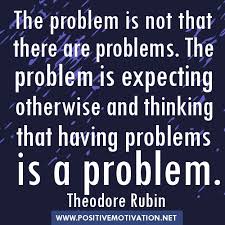
"The problem is not there are problems. The problem is expecting otherwise and thinking that having problems is a problem." Theodore Rubin

A problem is not a problem until you call it a problem. Before that, it is an occurrence or simply something that happened. Expecting all occurrences to be void of breakdowns/problems is a formula for disappointment.

From another perspective, think of the times you felt you were in the zone. It could have been an athletic event or a business transaction. When you were in the zone, problems had little or no effect on you. You may have looked at them as a slight bump in the road and you proceeded to solve the problem with little or no effort. And then you continued on with your goal.

Later, when you were asked how did you solve the challenge so effortlessly, you may have responded that it was like an outer body experience. And it would have been hard for you to explain. When we are in the zone, problems rarely show up as insurmountable. That's the example of when life is good. So why do people have problems with problems?

Perhaps the real reason we have problems with problems is because we secretly expect them. When they show up, we say, 'I knew something would go wrong'. It's like we programmed ourselves for the disappointment.

When they happen, we are upset because life seems to be filled with one problem after another. And all we want is a smooth harmonious life with no problems. It's like we are waiting for the day that we believe we deserve - a life with no problems. But, as usual, we know the next breakdown is just around the corner.

In fact, we spend time dreaming about the day we meet the right person and find the right job that will give us eternal peace and harmony. While at the same time, our environment has trained us to never get too happy because the next problem is around the corner.

Nevertheless, we have all had the experience of being in the zone. If you focus on doing something well, you will find it much easier to get into the zone. In that space, you will find problems rarely seem to be a problem.


Tuesday, 11 April 2017

How To Build Your Confidence Fast


A lack of self-confidence can come from such a variety of different origins that it's almost impossible to track down.

Gaining self-confidence doesn't have a one size fits all solution.

Although people sometimes experience traumatic events that result in a catastrophic loss of self-confidence, often it's more a case of a continual buildup of experiences that erode a person's confidence. Even in the case of a traumatic event, the event is usually just the final straw.

Building confidence back up, then, requires fighting fire with fire: an accumulation of different efforts.

Maybe you know someone who took up karate, sky diving or lawn bowling and went from painfully shy and anxious to social butterfly. If that's the case, examine their lives carefully. Just like the final straw might be the ultimate in a series of debilitating experiences, so the reverse may be true.

One activity or event may act as the catalyst that sparks off a series of experiences that all help to grow self-confidence. For example, maybe as that person grew confident in their ability at karate, then they had the confidence to start aiming for and hitting other, smaller goals, that eventually rebuilt their self-confidence.

Before getting started with confidence building activities, it's important to revisit the idea that emotions are temporary. True, some may last weeks, months or years - but they are not a permanent blight on your wellbeing. Complicated emotions that feed insecurity are like these.

The first thing you can do to start on the path to becoming the self-confident person you have always wanted to be and let that inner beast out is to decide to do something about it and follow through.

Habitual behavior forms your thoughts. That's why following through is so important. By continually deciding to do something about your situation but not following through, you are telling your brain that following through with action is not important.

The brain is a complicated neural processor - like a computer. Remember that a computer will only give you information based on what you input. Telling your brain that taking action to relieve your self-confidence crisis isn't important enough to you to do is the same as telling it that you are happy with the low mood it is outputting.

No matter how you choose to slowly boost your confidence, remember that confidence and competence goes hand-in-hand. So try to find a couple of activities to do to increase your skill on certain areas of your life, practice them consistently, focus on the positive outcomes and you will raise your confidence baseline as time goes by.


Plus-You Can Now Join Our FREE Mastering Success Facebook Community at www.masteringsuccess.group


Monday, 3 April 2017

5 Ways to Recover From Terrible Failure


Failure can cause one to lose confidence and motivation. Failure can sometimes wreck havoc on our emotions and make us feel depressed. What is worse is that after failing most of us do not always wish to try again because of the negative emotions that we feel. Failure makes us avoid trying again. This can happen on a conscious and unconscious level. It is thus important that you manage what you perceive as failure well in your life to ensure that failure doesn't affect you on an unconscious level and affect your future performance as you try and achieve your goals. Some of the emotions that we experience that affect our ability to take action to create the outcomes that we seek are due to past failures. These emotions may include fear, self-doubt and a lack of confidence.

I have developed a few ways that you can use in your life to recover from failure and heal yourself so that your past failures do not affect your future performance. Here they are:

1. Manage emotions using acceptance

What we perceive as failure can cause us to have a lot of emotional strain. We may experience emotions ranging from anger to sadness and resentment depending on what the situation is. After failing it is not always possible to keep these emotions from affecting us. To recover from failure and keep these emotions under control you need to use acceptance. You need to accept that things did not go well and that there might be consequences to be dealt with from whatever that has happened. Depending on the situation, consequences as the result of failure might vary -; you might be criticised, you might be held accountable, you might have lost money, you might lose your self-confidence, you might lose your job or business. Whatever it is and whatever the consequences are, drive yourself towards acceptance because this is the only way in which you will better find creative solutions to the challenges that you might be facing. It is tempting when we face challenges to dwell on the emotional pain, to think and go over what ifs but ultimately we have no choice but to make decisions and act if we are to change our circumstances.

2. View failure as an isolated incident not an inclusive incident

In our lives sometimes we have what I call "cross contamination". When one area of our lives isn't working as well we wish it could, the unhappiness and emotional strain that we experience from the area which isn't working well gets carried across other areas of our lives. We begin to feel like nothing else in our lives is working. Cross contamination causes us to carry emotional strain from work or business to our family lives and ultimately to our health and well being. The opposite can happen as emotional strain from our family lives can sometimes extend to our workplace and ultimately our well being depending on how we respond to the problems that we face.

You need to view the specific failure that you are recovering from as an isolated incident in order to stop this from straining other areas in your life. This is not easy to do as sometimes having a bad day at work can mean a bad evening with the family or vice versa. However, if you learn to better manage your emotions and isolate problems in various areas of your life, you might be in a better position to prevent emotional strain from one area of your life to cross contaminate all other areas of your life. This can only be done through improved self-awareness and emotional discipline.

Sometimes failing in a specific area can make you feel as if you failing at everything. You need to be aware that failure in a specific area in your life doesn't mean that you will fail on every other area. So see each failure as specific and not inclusive.

3. View failure as feedback from your specific actions

After following step 1 and 2 above you should begin to be in a better emotional state to think constructively about what went wrong and what has not worked well to cause the outcomes that you did not want. With this improved emotional state you should now use failure as a learning by analyzing what really went wrong and what actions you could have taken to improve your results. Most failures are due to a lack of planning, processes that did not work well, unforeseen circumstances, failure to be pro-active and so on. This is now time for you to diagnose what didn't work with clear emotions and an open mind. So assess what went wrong and identify things that need to be improved for you to create better results in the future.

4. Commit to new actions

After diagnosing your failure and receiving feedback from it you need to commit yourself to new actions in order to fully recover from your failure. Ask yourself what you will do and no longer do as a result of the feedback you received from your failure then commit yourself to new resolutions. You can list things you will do such as early planning, better communication, improve processes etc. Listing things that you will no longer do that might have caused you to fail is as important. So also list things that you will not do in the future such as procrastinating, avoiding administrative work, communicating poorly and so on.

What is important to note is that committing to new actions will also give you an emotional boost and hope. Often when we are in distress just thinking of the next practical step to take is enough to help us have hope for better future results.

5. Remember your past successes

Remembering things you did well in the past can help you gather strength to recover from immediate failure. Have things worked well in the past? Is there historical performance that you can look to and be proud of? if so, list these great achievements and performances and make them more prominent in your mind. Remember how you felt when things worked well and rekindle these feelings to gather strength to overcome present challenges. This will help you regain your self-confidence as you plan how to better deal with the future.


Imagine what your life would be like if you had self-confidence and did not hesitate to act and create all the outcomes that you want in life. Picture yourself believing in yourself and becoming exactly who you want to be. A successful man or woman who is happy doing things that he or she loves and has great relationships. No more would you have to suffer from second guessing yourself and taking the back seat, criticizing yourself or enduring the pain of those that criticize you and do not appreciate you...


Plus-You Can Now Join Our FREE Mastering Success Facebook Community at www.masteringsuccess.group


Sunday, 2 April 2017

Teach People How To Treat You Better!


According to Dr. Phil, "We teach people how to treat us." Let that sink in for a moment. Rephrase it and repeat it a couple times to yourself. "I teach people how to treat me." Maybe you're thinking, my life isn't perfect and maybe once in a while an argument gets heated, but I'm doing alright.

But think for a moment about how people really do treat you. How does your spouse or significant other talk to you or about you? Do you feel supported and like you are both on the same team? What about your dad? Your ex? Do you walk on eggshells or tip toe around certain issues to avoid an argument? Think about nicknames people use for you, is there one you don't really like but you just let it go?

Are there things that any of them say that are a little on the edge of being rude? How do you react when this happens? Do you stop it, leave the room as if you didn't hear it, or just keep quiet? They may call you "big mama" referring to your extra weight but they frame it as "an inside joke". Do you laugh with them? Or do you ask them not to use that reference for you again?

What about your children? How do they talk to you? How do they behave toward you? Do they yell at you, try to hit you, push, ignore you, or kick at you when they don't get their way? Do you chalk this up to "just a tantrum" or do you discipline them for it? Do they show appreciation or just demand or expect you to cook, clean, and drive them to/from activities?

Think about other people in your life such as co-workers, friends, and relatives. Maybe they joke about "you and your book smarts", refer to your "hillbilly" accent, comment that you "run or throw like a girl", or ask "when are you going to just get a real job?" How do you respond? Does it feel like your co-workers or your boss value your contributions? Have you been corrected or yelled at by a boss or co-worker in front of other employees or customers?

As you think about how each of these types of people treat you, try to identify any patterns between them. For example, do both your husband and your in-laws make fun of the type of job that you have? Is there a running joke with your in-laws and your friends about your house being featured on the next TV episode of Hoarders or How Clean is your House?

Or maybe you have a friend or several friends that seem to imply that being a stay at home mom is not important or the fact that you work full-time and have your kids in daycare is not right. Maybe it's a co-worker who rolls their eyes every time you get a phone call from your kids who are at home.

Does this mean you are to blame for people treating you badly? Absolutely not. You are only responsible for what you knew when you knew it. And each person is ultimately responsible for their own behavior. But the good news is that now that you do know, you absolutely can teach most people how to treat you better!

The way that you teach people how to respect you or in some cases teach people how to treat you better is by first creating a very clear picture for yourself about what kind of behavior or treatment you will accept, how you express this to others, and how you respond if the poor treatment continues.

In order to set clear limits about how others treat you, it's important for you to first commit to some firm guidelines about how YOU treat yourself and others. The better you get at taking care of yourself, the harder it will be for you to tolerate disrespect from others. You also have to treat others well. The old adage, "do unto others as you would have them do unto you" should be your new mantra.

We teach people how to treat us, yes. But that doesn't mean that everyone who behaves badly toward us is an evil person. They may not even be aware of how their treatment makes you feel. And you definitely contribute to that if you don't let them know how their behavior impacts you. They don't know what they don't know either. And if they do know they are hurting you, all the more reason for you to put a stop to it now.

So now that you know you can teach people to treat you better, the next step is to learn more about how to set firm boundaries and how to express yourself in an assertive way. With a little practice, you will be able to send a clear message to folks that you respect yourself and won't allow anyone to violate that in the way they treat you. There are several ways you can learn to set boundaries and stand up for yourself including self-help books, community education classes, or by getting the help of a life coach who specializes in this area. Contact us today!


Plus-You Can Now Join Our FREE Mastering Success Facebook Community at www.masteringsuccess.group


Monday, 27 March 2017

Self-Improvement 1, 2, 3


1. Accept that you need to grow stronger.

Most of us have yet to achieve our highest desire. Our lack of success is usually some combination of our strengths being too weak and our weaknesses being too strong.

The combination is different for each of us. But what we all have in common is that in order to achieve the success we desire we must grow stronger.

Will your success mean stronger finances, taking care of your family better, giving back to your community, or possibly recognition and respect? Imagine how satisfied you will be with that.

Now, are you ready to accept your need to grow stronger?

2. Commit to your growth.

What you want to achieve is valuable to you. Do you think anyone else wants to achieve the same thing? The answer is almost certainly yes. And there are likely to be a lot of people wanting the same thing. Can all of you achieve it? Probably not.

So who will achieve what you, and many others, want? Those who are the strongest in several different areas. Before you even look at how strong or weak you are in those areas, you must decide how much success means to you. How much do you want it? How hungry are you for it?

In order to greatly improve your chances of success, you must commit to grow stronger. Few people will make the necessary commitment simply because they don't want it enough.

You cannot just want to succeed. That's not enough. Too many other people will want it more than you. You have to be passionate about achieving your goal. Only then will you be willing to work hard at your self-improvement.

Are you ready to commit to your growth?

3. Look at yourself.

In order to grow stronger, you have to know what your strengths and weaknesses are. Maybe you're already aware of some of them. Maybe not. Do you know which are holding you back? That's not easy to know.

We think there are ten qualities that are essential to your success. You need to understand them and then decide how strong or weak you are in each. Knowing that might mean asking friends and family about each of your qualities.

Then you can see how those ten qualities relate to you. You'll get an idea of how much you need to grow. Will your growth to success take long? Probably. Measurable success does not come easily.

But imagine how great you'll feel when it does. Imagine how proud you'll be. Imagine all the things you'll be able to do. Imagine how others will now be impressed with you. Is that what you want?

Are you ready to learn about yourself so that you can grow stronger?

Plus-You Can Now Join Our FREE Mastering Success Facebook Community at www.masteringsuccess.group


Thursday, 2 February 2017

5 Tips Make Your Goals Come to Life


1. Do something different. Go for a walk to clear you head, or meet friends at the local coffee shop to brainstorm or respond to questions or to make plans can do you the world of good. Sometimes a new environment has been the key to increasing productivity and creativity for me. Just change things around from your normal day.

2. Setting goals inside and outside of work place are necessary to keep me motivated. If I am just concentrating on work and not also on my home life, I find it harder to want to work.

We all need life outside of our 9 - 5 day. We also need goals for ourselves. You might choose to learn to cook, learn a new language or speed read. Whatever you choose, make it something you will enjoy.

3. Create a to do list. I love lists and highlighting the completed activities makes me happy! Creating a to do list not only helps you to get your must do's out of your mind, it also helps you to think clearly as you are processing less information at any given time. I love that feeling when I get the end of any tasks that I complete, as it gives me a great feeling of accomplishment. I can also reflect on this list in the future to see how I worked through problems if something similar arises.

I write my list in order of priority. I can then to see the scale of what I am working on and be able put my to do's in an order to work in with my day. I usually have several projects on the go at once and this helps me to be balanced over my schedule.

4. Sometimes there are things we just cannot do alone this is when we need to ask for help. This can be one of the hardest things to do, but remember that you can return the favour one day so it does not all need to be one-sided.

If you are at work, make your goal a joint effort and get buy in from the team. If the goal is at home, maybe you could ask your partner, family member or friend if they would like to learn that new language with you so you can practice on each other. Two brains are sometimes better than one.

5. The most important for me is to reward myself when I get to the goal. Don't fall in the trap of constantly looking for the next thing. Take a break, reward yourself and those who helped you get there and appreciate the journey. If you know the reward is coming, it makes it that bit easier to work towards the big goal at the summit.

I find that the main thing for me is to chip away a bit every day. It might be to reach out to someone, write a quick article, remind myself of the purpose or to read over the plan each morning. The focus of the goal must be big enough to make you really want it enough to motivate you to move forward.

Reaching the goals and rewarding yourself will give you the improved mood and revitalised mind and body that will make you and your team want to achieve more! Enjoy the process and reaching the end goal.


Saturday, 28 January 2017

Steps to Building Self Confidence


Self confidence, as the words suggest, is your inner feeling that gives you the assurance that you can achieve your desired results with a greater sense of responsibility. It is a belief in yourself that you can take up responsibilities and challenges in your life.

In order to attain this, you need to recognise your potential and know your inner strengths. Look at your achievements in your life's journey. Identify what is important to you and where you want to go. Replace any negative thoughts in your mind with positiveness and commit yourself to face challenges.

In order to cultivate and develop such a positive self-image the following needs to be enhanced:

1.Goals and Vision - Set realistic goals. Be a visionary and dream your goals. Convert your dreams into plans and plans into action. Stay focussed and persist in your efforts. Divide your goals into sub-goals and keeping work on them and lead them to your final goal.

2.Interpersonal Relationships - Participate in social activities. Join social clubs or charitable organisations. Get involved with people as this will channelise and renew your energy. Share your thoughts, view, hopes and aspirations with your near ones.

3.Communication Skills - Learn to interact with people using charm in your conversation. Recognising and complimenting others for their achievements will boost your desires to achieve similar results.

4.Knowledge - Enhance your knowledge by reading as much as possible on varied subjects. Newspapers, magazines provide lot of information and updates. Watch appropriate channels and programs on television to broaden your knowledge. This will give you confidence when you meet people, make presentations etc.

It is worthwhile that whenever you achieve something, take pride in your achievements. Congratulate yourself. It will boost your morale. Reflect on your successes and consolidate your confidence.

A good way of doing this is to display in your house any certificates or awards you have won in the past as this will motivate you to win more laurels. Keep appreciating these small achievements for enhancing your positive attitudes and inner strength.

One must however be also ready to face setbacks as these are only challenges that occasionally stand between you and your goals. Persistence is the key to success. Analyse the situation and take corrective steps. Do everything possible to bounce back with much more vigor till desired results are obtained.

Self confidence is all about you and your goals. You can only draw inspiration from other sources, but action is what you have to take. Action in the right direction. When you are self confident, you do what you believe to be right even if others mock or criticize you. You take risks and go the extra mile to achieve better things.


Friday, 27 January 2017

Why Positive Thinking Works


Positive thinking does create positive outcomes. But not everyone believes that. Some people think positive outcomes are only dictated based on how much effort you put into something. And, while effort counts, how great of an outcome can you have if you think miserably along the journey to that outcome? Some people think positive thinking is a "trendy thing" and that the truth is, "whatever is meant to be will be." And while destiny, fate, etc. can be something to believe in, you must realize that your mind and the energy you give off impacts that destiny. And then, you just have cynical people that always find the bad in situations or play devil's advocate way too much. Well, that is their prerogative, don't feed into it and stay away from them.

If you want more positive outcomes in your life, you do have to think positive. Positive thinking steers your course into a positive outcome. Here are 3 ways positive thinking leads you toward a positive outcome:

1. Positive Thinking Builds Confidence.

When you think positively you think positive about what is around you. You see the good in life and in people. You trust in yourself and your resources. This process builds confidence. As you see the strength and goodness of your world and yourself, you are more apt to take healthy risks. Instead of letting fear stop you from huge dreams and goals, you are able to believe in yourself and take leaps toward goals. You know that if you hit a barrier, you can hurdle it or those around you will help you hurdle it, and that builds confidence. Confidence is what you need to take risks and risks often lead to positive outcomes, like success.

2. Positive Thinking makes you See More Resources.

Happy and positive people see what they do have, and that goes for their resources, too. Those who think limitedly, are cynical or fail to see the positive in situations often miss resources that are right around them. They often close their mind to their community and those around them who want to help. You may often hear them use the statement "I always do everything myself." This is a very powerful black and white comment. This type of thinking shuts down a lot of amazingness right around them. Instead, the positive minded person looks at the resources they do have even if they are limited. They will work harder to find resources in the community that could support them. Resources will help you gain momentum, stay your course, and help you hurdle barriers. All things that will lead to a positive outcome.

3. Positive Thinking Keeps You Open-Minded.

Positive people have open minds. They listen to others, not just give their two cents. This gives insight into what people desire, what questions they should ask and alternate points of view. They try to see life through different perspectives. By opening your mind, you see more answers, opportunities and ways to live your life fully. More opportunities, more insights and more fulfillment create more positive outcomes.


Wednesday, 25 January 2017

How To Focus - Some Simple Tips


For many people, the desire to focus better and get things done overwhelms everything else. Yet when they get right down to it, the same people find it easy to be distracted and do not implement effective methods to boost focus. The key, then, is to identify simple tips that will show you how to focus better.

1. Know What Matters

The specific details will differ from one person to another. But all of us care about something. By deciding which are these important areas, you can select the right things to focus upon.

2. Choose Important Tasks

Every morning, select 2 tasks that you will finish by the end of the day. These tasks will fall into categories that are important to you. You have already identified them in the previous step, by deciding what matters most to you. Now when you get these 2 tasks done, you will be moving towards your important goals.

3. Get Things Done

You've chosen two tasks to complete. The next goal is to actually complete them. There is no point in just drawing up lists of things to do if you do not take follow up action and finish the tasks. So make that your highest priority. Get them done as early in the day as possible.

4. Put Off Distractions

Several things are interesting. You will constantly be tempted to try other things that you enjoy doing. But resist the temptation at least until you finish the two important tasks for the day. Once you get into the habit of resisting distractions, your focus will automatically improve and you will get more work done.

5. Stop Multitasking

Maybe you are used to talking on the phone while typing on your computer and simultaneously taking notes. Or maybe you try to cram an important conference call into the time you're doing the cooking while also keeping an eye on your son's homework. Stop multitasking. It makes you less effective. And it worsens your focus. Instead, concentrate fully on one of the tasks. Get it done. Then turn your attention to the next one. This way, you will finish more work in less time.

6. Slow Down

Hurrying through tasks is a surefire way to make mistakes or get things wrong. When you do that, you'll have to repeat the task. That takes longer. And it is also more effort-intensive. If you go about your tasks methodically and slowly, you will complete it faster and with fewer mistakes.

These simple steps will improve your ability to focus and make you more efficient. Soon the improved focus will become a habit and your effectiveness will skyrocket.


Tuesday, 10 January 2017

Top 5 Reasons Why You're Not Living Your Dream


1. "I'm too old to make a change."

Maybe you're over 30 and settled in your career. You don't even want to think about making a move somewhere else. Besides, at this point in your life, you're supposed to be doing what you want, right?

For some reason we seem to think that we have to "act our age". But what does that mean? Where is there a definition of what it means to be a certain age?

The next time you think you're too old to make a change, think about Colonel Sanders and Wally Amos. Age is truly nothing more than a number.

2. "I need more money."

You might have dreams of owning your own business. You automatically think about all the money you'll need to do that. Just the thought of it overwhelms you and stops you in your tracks.

Using money as a reason not to change is just another excuse. Sure, it does take money to start a business. But who says we have to have all the money at once? Sometimes just the process of planning out our dreams makes what seems impossible, possible.

When you start to visualize your dreams, new opportunities open up for you. You may even find options that don't require that much money.

3. "I'm afraid to make a change."

You may have made a career move in the past and things didn't turn out like you expected. Maybe your boss didn't treat you well or you weren't challenged enough. Now you might be afraid to make the same mistake again.

Fear can take over and paralyze us. The funny thing is that most of the things we fear generally do not become a reality. When we come up with reasons why we can't make a move, we are just avoiding true happiness.

Basing your future on events that happened in the past is a sure way of stopping yourself from growing. It's best to learn from the past so that you can move forward.

4. "I don't have time to try to live my dream."

You may be so focused on your daily duties that you don't stop to think about your dreams. They might be buried deep within.

Some of us have spent so much time trying to make a living that we really don't have a life. We haven't taken the time to learn what we are passionate about.

Listen to those inner voices. Acknowledge the ideas that keep popping into your head. Make note of what you do in your spare time. Ask yourself if you would do these things even if you weren't getting paid. Or, ask if you would do them as a hobby even if you won the lottery.

5. "I don't think anyone will approve of my dream."

You've been thinking about making a change in your career. But what will people think of you? Will they believe that you can be successful? Will they be waiting for you to fail?

We often sabotage ourselves by worrying about what other people think of us. A family member, co-worker, or friend passes judgment on our dreams. All of a sudden, that's enough to stop us from moving forward.

You have the right to do what makes you happy. As long as you are not hurting anyone, including yourself, go for it. You might upset some people in the process. But, ultimately, it is your life.


Friday, 6 January 2017

7 Simple Things Getting in the Way of Your Win


I am a firm believer that every single person living on this planet is born to win at whatever they put their hand on.

However, most people do not get what they desire out of life, unfortunately.


7 Simple Things Getting in the Way of Your Win

They learn to settle for much less than they want and tell themselves that they are happy with it. And here are 7 things that do get in the way…


1. You Care Too Much About The Opinions Of Others.

Do you sometimes feel like the agendas of other people in your life are coming ahead of yours?


Others may be friends, relatives, co-workers, employees, your children, anyone who seems to hold sway over what you do or do not do. This can be pretty insidious because you may actually convince yourself that it is best to do what they expect of you because that is holy, spiritual, loving.

It can make you feel like a good person, except there is this creeping resentment inside of you that refuses to go away. You feel guilty about that as well.

You want to be good and you want to help people out and you do care that people like you and it all holds you back from going after your own goals.

People do have a right to their opinions but you also have a right to your full expression and your full life. Do not cave under the pressure of trying to keep various people happy. This is your one experience of life, ensure you use it to do the work you are here to do.

2. Not Doing The Work On A Consistent Basis


Whatever goal you have in mind, there will be certain things that need to be done. Are you consistently doing the work or are you allowing your feelings to determine if you get on with the work?

One of the biggest killers of dreams is the inability to stay consistent and to show up day in, day out to do the work whether you feel like it or not. And yet, it is also the simplest thing to get you success.

There may be all kinds of obstacles in your path and yet, if you will simply commit to reaching a baseline activity level each day, you will surprise yourself with how quickly you move forward.

Right now, make a simple list of things that you are committing to doing each and every day.

If you are in business, then it needs to include communicating with your audience, list building and making offers. The list just needs to include the bare minimum things that you absolutely commit to doing daily. Of course, you give yourself permission to do even more on the days when you feel amazing.


Then make a solemn promise to yourself that you will do the work, even when you wake up on the wrong side of the bed. Then DO IT!


3. Trying To Be Perfect

Perfection is unnecessary and usually a procrastination tactic that gets in the way of you creating the life you desire.

Lots of entrepreneurs spend their time perfecting their product whereas their time would be better spent launching it to the market as soon as minimally viable and then improving it based on actual customer feedback.


Launch as quickly as possible. Correct and adjust based on feedback. Don’t get attached to one way of doing things. Be willing to trial different routes to market and stop waiting for the perfect way to do anything. It does not exist!


4. Self-Doubt


Can I let you into a secret?

Self-doubt is a choice. I know you may have felt helpless to change it but it really is your choice.

Self-doubt is a rehearsed response to life and its difficulties and you can simply choose to rehearse a different response. No, it is not easy but it is simple to do. Choose to check yourself whenever random negative thoughts present themselves to you and turn it around to something more positive.

I sometimes get my clients to hourly write out an ‘I AM’ list with all their positive qualities as well as all the things they are choosing to be.

This elevates their mood and they are able then to act from a place of power for at least the next 60 minutes before they do it again. After a few days/weeks of doing this, their brain is retrained towards self-belief.

You can try it for yourself. Set the timer on your phone for 60 minutes and do it.


5. Giving Up At Obstacles


Napoleon Bonaparte said “I see only my objective – the obstacles must give way.”Okay, Napoleon is not necessarily known for being nice and kind but that quote is relevant to this point and to all successful people.

In life and business, as you go for your objectives, you will have obstacles. You can be sure of it! The question is: Will they defeat you or will you defeat them? Obstacles are not roadblocks unless you make them so.

There is only way to fail – you quit – and there are many, many ways to succeed. Find your route to the win!


6. No Clarity Of Purpose


Do you actually know what you want? Clearly? Lots of people don’t!

They are experiencing goal fatigue where they give up on setting goals because it feel futile to wish for things to improve and so they settle into a life that goes nowhere and they try to ignore their boredom.

You, however, know you are born for more and so, you need to keep the vision clearly at the top of your mind. Write down your goals daily, write down your big vision regularly, write down how you choose to show up in the world.

Get clear! Define what a win means to you and refuse to back down until it is present in your world.


7. Focus on the Past


You cannot focus on the past and at the same time, create a better future. Your past has happened, it is done. There may be a few lessons to learn but really, you can draw a line under the sand and start creating a new future now. It really is your choice.

You can write out what you want to create and choose who you need to be to get that chosen future and right now, in this moment, choose to be that person until it becomes natural to you. Do it now!

As the saying goes, “Stop looking back, that is not the way you are headed”
Summary

If you will handle these 7 things, you will be much closer to winning at whatever you set your mind and heart to.


Are these things getting in the way of your win? Leave a comment below.

Monday, 2 January 2017

Are You Getting in the Way?


Getting out of our busy mode and into our heart occasionally, I'm certain that many of us would find at least one moment during our day where we could pause, reflect on a situation, and see something that we can do to make a difference in someone else's life.

The pace of life and work has increased a lot and I daresay we don't give as much thought as we could to the circumstances of other people's lives. Sometimes, we're so caught up in our own struggle that we don't think we can even afford the time to "give" our time, suggestions, talents, to others. And yet, if we do, we are rewarded.

We are often times, throughout our lives, able to experience richness, synchronicity, and reward through small acts of generosity. This isn't even about money, although sometimes the rewards will impact our financial status as well. And yet, we fail too often when we are so self-absorbed or consumed by our own situation thinking we'd give up too much by helping.

So, this is just a gentle reminder for all of us to pay attention to at least one "little thing" that will make a difference for someone else. Try to make it for someone you don't know well or don't know at all; family and friends are too easy and natural.

What do you think you could do to make a difference? I would absolutely love to hear from YOU! 


Sunday, 1 January 2017

Developing Self-Esteem


It would be pretty hard to become successful without first developing your self-esteem. In fact, I can't think of one person who is very successful who has low self-esteem.

Before we start going on about self-esteem, let's take a second to define self-esteem.

What is self-esteem? Self-esteem is defined as feelings of self-worth stemming from the individual's 
positive or negative beliefs about being valuable and capable.

It is pretty hard to develop self-esteem when you are working on a job that doesn't allow you to be 
exactly who you were meant to be. If you are working at a job that doesn't quite fit with who you are, 
chances are that job is messing with your self-esteem. How can you feel good about yourself if Monday through Friday for 8 to 10 hours, you are doing something that doesn't help in the development of your self-esteem?

The answer is - you can't.

You can't possibly feel good about yourself and what happens is, you start questioning your abilities. 
You start wondering if you are good enough or smart enough. You see others who seem to be doing well and having success, but for some reason, you keep falling short.

If you do not have high self-esteem, you will start to believe that you are at fault and that you don't 
measure up or you can't make the grade. The truth of the matter is, you aren't living your life with purpose. Because you lack passion for the job or career that you find yourself in, you will find that often times, you won't be excited about it. Your lack of enthusiasm will cause your work to not be up to par. It has nothing to do with your abilities. You can't be all that great at something if you are constantly watching the clock; waiting for your break or for the day to end because you are simply tired of being there. If you were doing something that you really enjoyed doing, something that you were passionate about, you would not help BUT measure up and excel the standards. 
Someone would probably have to tell you, "Hey, you, it's quitting time." And the time would seem to fly by without you even taking a lunch break.

How do we get in this position? How did we lose our self-worth?

Well, there are many answers to that question.

Perhaps one or both of your parents made you feel that you weren't worthy of their love because they 
didn't know how to give love. Or, perhaps a teacher or authority figure made you feel that you weren't smart enough. Maybe your siblings or childhood friends teased you and made you feel less than.

These, plus millions of other reasons, are contributing factors in how we see our self-worth. If you see yourself as being not worthy, then you will shy away from responsibilities. Often, these responsibilities, when they present themselves, may be the answer to our prayers--they may be the 
one thing that will lead us to living the life that we desire--to achieving that success that we've always wanted. But our doubts about ourselves and our low self awareness stop us from accomplishing our goals.

It's really sad. It hurts my heart when I hear someone say something negative about themselves. I have a girlfriend, who I think is very smart, a great person with a big and wonderful heart, and very entrepreneurial spirit. But she has this bad habit of saying, "I'm a bimbo." Every time I hear her say these words, I stop her. But I can imagine how many times she says it when I'm NOT around. She's not a bimbo. But because somewhere during her lifetime, someone probably called her a bimbo so much she simply accepts it as being the truth. Because of her "opinion" of herself, she often times 
experiences moments of doubt about herself.But how to do you change your opinion of yourself? 
How do you develop high self-esteem? Well, folks, as I always say, "it's simple--but it ain't easy."

In order to develop high self-esteem, you must start with being conscious of your self-talk--the things you say to and about yourself. Whenever you find yourself doubting your abilities or fearing what others will think of you--STOP, 

Tell yourself that you are just as good as or better than the next person. Tell yourself that you KNOW, beyond a shadow of a doubt, that you can perform the task and do a good job at it too. If you find yourself saying anything negative about you--STOP AT ONCE!! Put the brakes on. Hold it now!!! 
And change that thought to a positive one. Look at yourself in the mirror and tell yourself "I'm a winner. I'm a champion! I can do anything!" When you tell yourself this, take the time to FEEL as if you ARE a winner, a champion--how would a winner feel? Great, right? Well, make yourself feel great. Say it as if you really and truly mean it.

If you do this often enough, you will start to convince your subconscious mind that you ARE GREAT (which, by the way, you truly are already--you just don't know it yet. I do.) The more you become convinced, the higher your self-esteem will rise.

ACTION POINT! For the next 7 days, if you find yourself saying or thinking anything negative about yourself - STOP. Put the brakes on that thought. If someone says anything negative to you or about you--STOP tell that person, or simply tell yourself, "No, I'm not. I'm a winner, I'm a champion!" When you wake up each morning and go to the bathroom to wash your face, look in the mirror and say, "I'm a winner! I'm a champion! I'm a GREAT person!" Say it over and over and over again until you can feel it in your bones. Say it loud if you can (if you can't say it loud because you will wake up others, or you don't want them to think you are talking to yourself--then say it so that you can at least hear it.) Do this for a week and write me and tell me all about the new experiences that have been happening in your life because I know things will start happening and I'd like to hear 
about them.


Saturday, 31 December 2016

Tips on Boosting Your Self-Confidence


How you feel about yourself truly does affect your interaction with others.

It truly saddens me when I hear women using negative talk when referring to themselves. We aren't born with self confidence but it is something that we gain throughout our lives. There are many things that we encounter over the years to help build or break that confidence but ultimately it is up to us to maintain our own self-confidence. Those who lack self-confidence are truly losing out on opportunities for happiness, fun, growth and often love.

Here are just a few tips that anyone can use to help build self-confidence 

Start off each morning and end each day with a positive statement or thought. Create your own mantra. (i.e: "I am intelligent", "I will have a positive day", "I will succeed".)
Get to know the TRUE you and accept yourself. The more you accept your true self the more others will do the same.
Make a list of all your positive characteristics and achievements. Keep adding to this list as time goes on and be sure to keep your list in a place where you can access it and read it at will.
Choose your words/thoughts carefully: Take time to replace negative thoughts with positive ones. If you are faced with a challenging task -- instead of saying something like: "I will never get this done on time" try to rephrase that and say something like: "When I finish this task I will treat myself to something nice" or "This may be challenging but I can do this".
Take what you are good at and enhance it. Let others know about it! Hold you head up high and proud and know you have a special gift inside of you.

Building up self-confidence takes time and commitment but it is well worth it. You will soon find yourself embracing yourself and giving off a very positive energy that will surely come back to you.

I would love to hear what you think and any tips YOU have! Feel free to comment below.