Showing posts with label dreamers. Show all posts

Monday, 5 June 2017

Tell Me I Was Dreaming


Is this really happening... it has to be a dream; these are words born in the state of confusion that ensues when suddenly we wake up and realize they are gone. Gone is a lonely, desolate word delivering a cold harsh reality with awful finality. Gone carries the sound of the human heart breaking into pieces. It invites us to cover our heads and go back to sleep, back to yesterday when nothing was changed. Regardless of how strong and competent you may be the loss of someone you love is accompanied by a host of fears.

Will you make it through this, will your world ever be the same again, will you ever stop hurting, or how can life ever be the same again? These are the fears that accompany a profound loss. Somehow diving back under the covers to dream time is a natural response. And why not; we heal when we sleep. This kind of traumatic change inflicts deep wounds, the kind we can't see but can never stop feeling. We instinctively run to the place where the pain stops, even momentarily. There is a need to return to sleep where we can once again touch the one who is gone.

For those who have experienced a profound loss, they know this is true. When we sleep those barriers born of 'good common sense' are down. When we dream we touch that which has gone, seeking answers that haunt us. We pray it was just our imagination telling lies, maybe they didn't really say goodbye; we need to ask those haunting questions, 'Can you hear me, are you OK, are you in pain, did you know how much I loved you; do you know how much I hurt?' These are a few of the answers we are seeking; we have to know, seemingly because we cannot go on until we do. And so we sleep until we find the truth, and there where our filters and bias are gone we find our answers. We don't really need an affirmation; we just know we have made the connection and learned the truth. We are fully awake again, wobbly, but able to test the road forward and learn to navigate without them. It really happened, it was not a dream.

There is no painless way to lose a loved one. It is a unique experience for everyone. No one can do more than understand your pain. Everything else is personal, as it should be. It is a broken road to travel yet in some odd way your grief protects you, forcing you to go slowly and see every option before you. This is necessary and helps you to see more clearly as you choose the right turn for you, onto a new path and a new future. It may never be pain free but you will always be more aware of how important today is and how comforting memories will always be. There is a startling clarity in creating new memories because you understand how important it is to capture and hold them close.


Monday, 3 April 2017

5 Ways to Recover From Terrible Failure


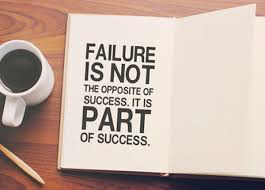
Failure can cause one to lose confidence and motivation. Failure can sometimes wreck havoc on our emotions and make us feel depressed. What is worse is that after failing most of us do not always wish to try again because of the negative emotions that we feel. Failure makes us avoid trying again. This can happen on a conscious and unconscious level. It is thus important that you manage what you perceive as failure well in your life to ensure that failure doesn't affect you on an unconscious level and affect your future performance as you try and achieve your goals. Some of the emotions that we experience that affect our ability to take action to create the outcomes that we seek are due to past failures. These emotions may include fear, self-doubt and a lack of confidence.

I have developed a few ways that you can use in your life to recover from failure and heal yourself so that your past failures do not affect your future performance. Here they are:

1. Manage emotions using acceptance

What we perceive as failure can cause us to have a lot of emotional strain. We may experience emotions ranging from anger to sadness and resentment depending on what the situation is. After failing it is not always possible to keep these emotions from affecting us. To recover from failure and keep these emotions under control you need to use acceptance. You need to accept that things did not go well and that there might be consequences to be dealt with from whatever that has happened. Depending on the situation, consequences as the result of failure might vary -; you might be criticised, you might be held accountable, you might have lost money, you might lose your self-confidence, you might lose your job or business. Whatever it is and whatever the consequences are, drive yourself towards acceptance because this is the only way in which you will better find creative solutions to the challenges that you might be facing. It is tempting when we face challenges to dwell on the emotional pain, to think and go over what ifs but ultimately we have no choice but to make decisions and act if we are to change our circumstances.

2. View failure as an isolated incident not an inclusive incident

In our lives sometimes we have what I call "cross contamination". When one area of our lives isn't working as well we wish it could, the unhappiness and emotional strain that we experience from the area which isn't working well gets carried across other areas of our lives. We begin to feel like nothing else in our lives is working. Cross contamination causes us to carry emotional strain from work or business to our family lives and ultimately to our health and well being. The opposite can happen as emotional strain from our family lives can sometimes extend to our workplace and ultimately our well being depending on how we respond to the problems that we face.

You need to view the specific failure that you are recovering from as an isolated incident in order to stop this from straining other areas in your life. This is not easy to do as sometimes having a bad day at work can mean a bad evening with the family or vice versa. However, if you learn to better manage your emotions and isolate problems in various areas of your life, you might be in a better position to prevent emotional strain from one area of your life to cross contaminate all other areas of your life. This can only be done through improved self-awareness and emotional discipline.

Sometimes failing in a specific area can make you feel as if you failing at everything. You need to be aware that failure in a specific area in your life doesn't mean that you will fail on every other area. So see each failure as specific and not inclusive.

3. View failure as feedback from your specific actions

After following step 1 and 2 above you should begin to be in a better emotional state to think constructively about what went wrong and what has not worked well to cause the outcomes that you did not want. With this improved emotional state you should now use failure as a learning by analyzing what really went wrong and what actions you could have taken to improve your results. Most failures are due to a lack of planning, processes that did not work well, unforeseen circumstances, failure to be pro-active and so on. This is now time for you to diagnose what didn't work with clear emotions and an open mind. So assess what went wrong and identify things that need to be improved for you to create better results in the future.

4. Commit to new actions

After diagnosing your failure and receiving feedback from it you need to commit yourself to new actions in order to fully recover from your failure. Ask yourself what you will do and no longer do as a result of the feedback you received from your failure then commit yourself to new resolutions. You can list things you will do such as early planning, better communication, improve processes etc. Listing things that you will no longer do that might have caused you to fail is as important. So also list things that you will not do in the future such as procrastinating, avoiding administrative work, communicating poorly and so on.

What is important to note is that committing to new actions will also give you an emotional boost and hope. Often when we are in distress just thinking of the next practical step to take is enough to help us have hope for better future results.

5. Remember your past successes

Remembering things you did well in the past can help you gather strength to recover from immediate failure. Have things worked well in the past? Is there historical performance that you can look to and be proud of? if so, list these great achievements and performances and make them more prominent in your mind. Remember how you felt when things worked well and rekindle these feelings to gather strength to overcome present challenges. This will help you regain your self-confidence as you plan how to better deal with the future.


Imagine what your life would be like if you had self-confidence and did not hesitate to act and create all the outcomes that you want in life. Picture yourself believing in yourself and becoming exactly who you want to be. A successful man or woman who is happy doing things that he or she loves and has great relationships. No more would you have to suffer from second guessing yourself and taking the back seat, criticizing yourself or enduring the pain of those that criticize you and do not appreciate you...


Plus-You Can Now Join Our FREE Mastering Success Facebook Community at www.masteringsuccess.group


Thursday, 20 October 2016

The 15 Success Habits All High Achievers Have

Ever wondered what success habits separate high achievers from the rest of the dreamers?

Some people perform better. They achieve more and always succeed in what they do. But what more do they have that helps them get such results?

Truth is, they aren’t any different from us – at the beginning we’re all equal. But what differentiates them from the rest is the behavior they adopt on the way to achieving their dreams.


15 Success Habits High Achievers Have


High achievers have different habits than the average people. Their days consist of others activities and their head is full of other thoughts.

So here are the success habits and best practices of such people that make them stand out, get things done and move forward:


1. They Get Up Early

The average person needs a lot of time to wake up. That’s because he usually goes to bed late, stays in front of the computer, and is now hitting the snooze button, trying to put off starting the day.

But if that’s the firth thing you want and think about in the morning – how to avoid an early start of the day – then how do you expect the rest of it to be any better?

A different approach, however, is to go to bed earlier and have a good sleep. To wake up motivated to take action because you got stuff to do. To face the day, make the most of it, realize what a gift it is and be excited about what it will bring.


2. They Read

Instead of checking email and using your phone all the time, watching TV, being on all social medias and constantly updating random statuses, you should sit down and do some reading, or writing.

That’s an activity for your free time that will make you think, grow, learn and improve in general. And it’s what high achievers do daily.


3. They Have A Morning Routine


Another thing you’d better do after getting up early is to have a success ritual.

The benefits are amazing – you get energized, boost productivity, jumpstart the day, have time for yourself, plan out the stuff you need to get done later, and have a peaceful morning.
So think about it if you don’t have a routine already.


When you’re serious about becoming successful and achieving more in life, sleeping in is not an option.

But it’s also important how you spend that first hour after leaving bed. And filling it with productive, positive and creative activities like meditation, a quick workout and some writing or reading, is the best option.


4. They Have A Vision

A life without direction is pointless.

Those who actually achieve something and get somewhere, are seeing that place much earlier than the time they actually get there. Because in their minds, they’re constantly visualizing the upcoming success in details.

That’s a powerful technique that can get you closer to whatever it is that you want in life. No matter how big.


5. They Rest Properly


Successful people sleep well, take breaks, power nap, meditate to clear their mind every day, and have other rituals that help them relax, rest their body and mind, and not feel drained at the end of the day.

This helps them work harder, be more focused, get better results, and eliminate stress and depression.


6. They Take Responsibility for their Actions


Blaming other people, or even circumstances or life in general, is an awful habit many people share. But that’s not how a determined person sees things.

Instead, he takes responsibility for his actions, even if he’s made a mistake, learns from it, accepts it, and moves on trying to do it right next time.


7. They Talk About Ideas with Other Purpose-Driven People

If you’re surrounded by negative people who let you down, complain about their lives all the time, or are just talking about other people and events in their life, you won’t change for the better.

But you can still turn that around and choose to communicate with positive individuals, spend time with creative people, full of life and positivity, ambitious human beings with goals and dreams.
And soon you’ll see yourself thriving.

After all, environment is crucial for success and we’re the average of the five people we spend most time with.


8. They Have an Evening Routine


For maximum results you should start the day with a morning routine, and end it with a bedtime ritual.

It may include stuff like examining the day and assessing your performance, making a plan for tomorrow, brushing your teeth and flossing, meditating (again), and doing some reading so that you can go to sleep faster.

And it definitely doesn’t include any food, electronic devices, alcohol, or falling asleep on the couch in front of the TV.


9. They Prioritize


Even if you have 50 things to do today, there are just a few that are really important. Your job is to define them and focus on them first.

These are the things that help you move towards your goals, that help you improve, earn more, be in a better shape, etc.


10. They Say ‘NO’ to Some Things

High achievers know they have to say ‘no’ to stuff that seems pretty tempting now, but which can only harm them in the long term.

So they often miss parties or other social events, get up early even though they really want to stay in bed, work out when their mind tells them to stay in front of the computer for a little more, and don’t eat the junk food they crave.

Sacrifices like that are what shapes your character and make you the person you need to become in order to lead the lifestyle you imagine.


11. They Grow Spiritually


As I mentioned, some of their best (and daily) practices include reading, meditating, interacting with creative and passionate people, etc.

And all that helps them grow. Soon, it becomes a habit for them to look for chances to learn new stuff, try new things, gain experience and evolve.


12. They Eliminate Distractions

Distractions are everywhere. And always will be. But if we realize how important our current activity is, and choose to focus only on it, other people coming in the room, notifications, worries, fears and random thoughts won’t matter that much.

So concentrate on what you’re doing now. And if it’s connected to your dreams, you’ll find a way to eliminate everything that distracts you and will actually get some work done.


13. They Take Immediate Decisions

People usually spend too much time trying to make a decision. Even if it’s an easy one, they struggle with choosing an option as they try to choose the best one.

But you should let go of perfectionism. And, instead, just take one of the two things and make the best of it.


14. They Get Rid of Time-Wasting Activities

Most of the things we do daily aren’t productive. In fact, they are only slowing down our self-improvement process. And the best we can do is stop doing them and do more of what works and has helped so far.

Reading newspapers may not have any positive effect on you, but if you spend that time planning out your whole day in details, you’ll be much more productive and will see the bigger picture of where you’re heading in life.


15. They Approach Other Successful People

Often we’re too scared to even try to talk to someone that’s superior to us. But people like that are usually friendlier and more open-minded than we expect.

After all, they too started somewhere and wanted to change and ask more successful individuals for advice. So they might as well take the time now to give you some tips, help you in some way or encourage you and give you feedback.


In Conclusion


Great habits, right? And none of them are hard. You can start applying them right now. But start small – one change at a time.

Can you add other practices that lead to greater results in life?