Showing posts with label OCD. Show all posts

Monday, 15 May 2017

Feelings Aren't Facts


Often there may be a distortion, be it big or small, regarding how we see ourselves, others, or our lives in general. This distortion, or as I call it, the story we tell ourselves, frequently leads to emotional pain, increased anxiety, and potentially depression. That is because feelings aren't facts.

The phrase, feelings aren't facts, is commonly used in 12-step programs, yet it is profoundly true for all of us. This phrase uses the term, feelings, in such a way that it is not about emotions such as sadness, grief or anger. Instead it refers to our beliefs, perceptions, interpretations and thoughts. It speaks to the ways in which we experience ourselves, or others, in a subjective way.

Perception is Reality

When we say, for example, "I don't feel good enough." How could this statement not create further unease? Although others in our world may perceive us as amazing, or more than good enough, it is what we tell ourselves, even if it is not a fact, that emotionally distresses us.

This may be further exacerbated by making comparisons based on our assumptions about other people. We may tell ourselves, "That woman has got it all together. Look at her. How come I don't?" This story may also not be a fact, yet because we believe it is, it may further exacerbate, or contribute, to the wearing away of our self-esteem.

Fact or Fiction

When we operate from a place of misconception, distortion, or fiction, then we walk through the world from this place. This can produce a distortion of ourselves, of other people in our lives, or the world in general. If we function from a place of fear, anxiety or anger our perception of reality can be tainted with negativity. These painful feelings, although triggered by non-facts, can still ultimately affect us.

Another person's comment may remind us of something that occurred in our history. Accusations and judgements that occurred in our childhood, or adolescence, that were not resolved may influence our interpretation of circumstances in our current lives. The other person, and even ourselves, may have no idea this unresolved issue has influenced our perception unless this interaction is explored or clarification is sought.

We Believe What We Perceive

Our internal process, or how we internally experience or interpret something, is often more about our history as opposed to what the other person may truly mean. The stories we tell ourselves about what the other person means may negatively affect the relationship.

Often we use the word feeling for what is not a feeling. For example, I feel that you are accusing me of lying. It is important to differentiate this thought from the feelings that are triggered by it.



Monday, 3 April 2017

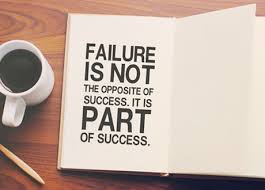
5 Ways to Recover From Terrible Failure


Failure can cause one to lose confidence and motivation. Failure can sometimes wreck havoc on our emotions and make us feel depressed. What is worse is that after failing most of us do not always wish to try again because of the negative emotions that we feel. Failure makes us avoid trying again. This can happen on a conscious and unconscious level. It is thus important that you manage what you perceive as failure well in your life to ensure that failure doesn't affect you on an unconscious level and affect your future performance as you try and achieve your goals. Some of the emotions that we experience that affect our ability to take action to create the outcomes that we seek are due to past failures. These emotions may include fear, self-doubt and a lack of confidence.

I have developed a few ways that you can use in your life to recover from failure and heal yourself so that your past failures do not affect your future performance. Here they are:

1. Manage emotions using acceptance

What we perceive as failure can cause us to have a lot of emotional strain. We may experience emotions ranging from anger to sadness and resentment depending on what the situation is. After failing it is not always possible to keep these emotions from affecting us. To recover from failure and keep these emotions under control you need to use acceptance. You need to accept that things did not go well and that there might be consequences to be dealt with from whatever that has happened. Depending on the situation, consequences as the result of failure might vary -; you might be criticised, you might be held accountable, you might have lost money, you might lose your self-confidence, you might lose your job or business. Whatever it is and whatever the consequences are, drive yourself towards acceptance because this is the only way in which you will better find creative solutions to the challenges that you might be facing. It is tempting when we face challenges to dwell on the emotional pain, to think and go over what ifs but ultimately we have no choice but to make decisions and act if we are to change our circumstances.

2. View failure as an isolated incident not an inclusive incident

In our lives sometimes we have what I call "cross contamination". When one area of our lives isn't working as well we wish it could, the unhappiness and emotional strain that we experience from the area which isn't working well gets carried across other areas of our lives. We begin to feel like nothing else in our lives is working. Cross contamination causes us to carry emotional strain from work or business to our family lives and ultimately to our health and well being. The opposite can happen as emotional strain from our family lives can sometimes extend to our workplace and ultimately our well being depending on how we respond to the problems that we face.

You need to view the specific failure that you are recovering from as an isolated incident in order to stop this from straining other areas in your life. This is not easy to do as sometimes having a bad day at work can mean a bad evening with the family or vice versa. However, if you learn to better manage your emotions and isolate problems in various areas of your life, you might be in a better position to prevent emotional strain from one area of your life to cross contaminate all other areas of your life. This can only be done through improved self-awareness and emotional discipline.

Sometimes failing in a specific area can make you feel as if you failing at everything. You need to be aware that failure in a specific area in your life doesn't mean that you will fail on every other area. So see each failure as specific and not inclusive.

3. View failure as feedback from your specific actions

After following step 1 and 2 above you should begin to be in a better emotional state to think constructively about what went wrong and what has not worked well to cause the outcomes that you did not want. With this improved emotional state you should now use failure as a learning by analyzing what really went wrong and what actions you could have taken to improve your results. Most failures are due to a lack of planning, processes that did not work well, unforeseen circumstances, failure to be pro-active and so on. This is now time for you to diagnose what didn't work with clear emotions and an open mind. So assess what went wrong and identify things that need to be improved for you to create better results in the future.

4. Commit to new actions

After diagnosing your failure and receiving feedback from it you need to commit yourself to new actions in order to fully recover from your failure. Ask yourself what you will do and no longer do as a result of the feedback you received from your failure then commit yourself to new resolutions. You can list things you will do such as early planning, better communication, improve processes etc. Listing things that you will no longer do that might have caused you to fail is as important. So also list things that you will not do in the future such as procrastinating, avoiding administrative work, communicating poorly and so on.

What is important to note is that committing to new actions will also give you an emotional boost and hope. Often when we are in distress just thinking of the next practical step to take is enough to help us have hope for better future results.

5. Remember your past successes

Remembering things you did well in the past can help you gather strength to recover from immediate failure. Have things worked well in the past? Is there historical performance that you can look to and be proud of? if so, list these great achievements and performances and make them more prominent in your mind. Remember how you felt when things worked well and rekindle these feelings to gather strength to overcome present challenges. This will help you regain your self-confidence as you plan how to better deal with the future.


Imagine what your life would be like if you had self-confidence and did not hesitate to act and create all the outcomes that you want in life. Picture yourself believing in yourself and becoming exactly who you want to be. A successful man or woman who is happy doing things that he or she loves and has great relationships. No more would you have to suffer from second guessing yourself and taking the back seat, criticizing yourself or enduring the pain of those that criticize you and do not appreciate you...


Plus-You Can Now Join Our FREE Mastering Success Facebook Community at www.masteringsuccess.group


Saturday, 1 April 2017

Don't Let Stress Get the Best of You


We all have felt like we are under situations where our to-do lists seem endless; our days and nights become one but the overwhelming task just doesn't end. Situations when deadlines are fast approaching and you catch yourself saying 'My goodness, I am under so much stress'. That is a good understanding of stress.

But what is stress?

It is a condition under which the body feels like it is under attack and it switches to a 'fight or flight' mode. There are a lot of chemicals released in your body like cortisol, epinephrine and norepinephrine that change the functions of your body. All the unnecessary bodily functions shut down to help you escape this attack.

Let's use an example to better understand the fight or flight response of the body. Imagine you are walking down a lonely street and you are carrying enough money to enjoy a dinner with your friends at a five-star restaurant. Suddenly, a man jumps at you from behind a tree and points a knife at you. You could do one of the two things- 
Fight: you will make an attack strategy to knock down the thief and your body will prepare you for it.

Flight: you will look for the easiest escape route and run for your life, maybe even screaming for help on your way.

Let's list some causes that could give you stress in your life.

• Fast approaching deadlines at work or studying in a crunch time during exams. 
• Facing financial difficulties or road blocks in relationships. 
• Thinking you are not good enough for any task and feeling guilty for being a burden on everyone. 
• Not being flexible enough therefore having difficulty in adjusting to new situations. 
• Not being able to adjust or compromise easily. 
• Getting easily affected by anything pessimistic that others say.

Now we should look at the symptoms of stress; the ways in which we can recognize ourselves under stress.

• Difficulty in concentrating on the task at hand. 
• Not being able to remember small things you wouldn't forget otherwise. 
• Seeing negativity in everything. It becomes very difficult to see the glass half full. 
• Constantly worrying or being anxious. 
• Isolating yourself from everyone. 
• Feeling irritable or moody.

Stress is manageable. Before it gets out of hand we must learn to control it. Here are ways to keep stress from getting out of hand.

Adopt efficiency- when you have to many things to finish, make a time table and follow 
it closely. That way you will get everything done little by little and it won't stress you out.

Meditate- when your body starts reacting under stress, meditating will help you stay calm and on top of things.

Learn to say no- when you already have too much work to finish and someone gives you more work, don't feel bad in saying no. It is important to not wear yourself out. 
Eat right- when you are under stress you could either lose your appetite or it could become bigger than usual. But you must learn to eat the right kind of things and in an appropriate proportion.

Get enough sleep- but trying to finish all your work and skipping sleep, you won't be helping yourself. Your body will get tired faster and you will lose energy more quickly. 
You may be thinking that stress is a bad thing to have and you will try to escape it all the time. But don't worry, stress is good. It is only when you're under stress that you can push yourself to do better and achieve the impossible. You only have to keep it under control.


Plus-You Can Now Join Our FREE Mastering Success Facebook Community at www.masteringsuccess.group


Monday, 20 March 2017

Overcome Worry And Be Less Anxious


Everyone worries. But at times our lives bog down with too much worry, which impacts appetite, lifestyle, relationships, sleep, and job performance.

Worry really offers little benefit to life, so if we look at causes and prescriptions for worry our it becomes manageable.

People often worry because they enjoy it. They have a need to live with daily drama. Constant worry meters out doses of drama on an "as needed basis" and this seems normal. By dramatically acting out life issues big or small, these people stay on center stage with sympathy as their needed applause.

Uncertainty is another catalyst. The uncertainty of jobs, bills, debts, children, life changes, etc punches our worry button. People often don't react well to changes brought on by normal life uncertainties.

But, change is a partner in life and may allow good to things happen. Take note, Charles Darwin's research indicated that it's not the strongest nor most intelligent that survive, but those who are most responsive to change.

Lack of knowledge or skills creates anxiety. Being in a position where we feel "in over our heads" is worrisome. Being out of the comfort zone is tough for everyone. But, the fact is you either climb your own way up to speed in knowledge and skills, or you change your surroundings.

Another contributor to worry is the lack of control. We all need some control. Even a toddler does things to exert control in an adult's life.

We really may have more control than we realize and just don't recognize it. But, there will always be things beyond our control and we must learn to function as things are.

Our upbringing and past life experiences will also foster anxiety. Parents have been known to create worry filled homes with an odd child called anxiety. Research indicates that we're molded by our social environments and tend to mimic them.

Worry may come from past trauma or negative experiences. Accidents, illness, or personal witness to bad events causes anxiety. These may be justifiable causes but stick with us just the same.

Even with so many prompts for worry, it's not as difficult to curb as you might think. But, you need the desire to change your life, and you do need to work at it.

Turning to ideas for managing worry, Winston Churchill reflecting back on his own troubles found that many never really happened. Shakespeare gives another clue when he wrote, "to thine own self, be true".

Honest self-reflection is a good step toward managing anxiety and counseling opens a door to personal discovery. The more clarity we gain the more quickly we move toward positive ground.

We have natural tendencies toward vagueness and generalization. Along with counseling, sharing with a trusted family member or close friend, or even a personal worry diary can help clarify issues.

Guarding against falling into the "what if trap" is a necessary for worry management. Conjuring "what if" scenarios is of little value since most of the plots we create rarely happen. So instead of imagining things that may never happen, eliminate the "what if's".

Find ways to embrace the uncertainty of life. At times, life is a great venture. At times, it requires problem-solving. At times, it totally stumps us. But, each moment in life inevitably happens with little predictability. Worry doesn't change this.

Start an exercise program. Walk, bike, swim, jog, stretch, etc. Exercise goes a long way toward eliminating stress and anxiety. A moderate daily routine of exercise will boost your mental health.

Finally, worry does little good, fixes nothing, and causes anxiety. Self-understanding is central to living a worry free life. So, embrace life, be honest with yourself and worry less.


Plus-You Can Now Join Our FREE Mastering Success Facebook Community at www.masteringsuccess.group


Sunday, 15 January 2017

The Power of Habit


Aristotle once said, "we are what we repeatedly do" and this shows the power of habit. If we are repeatedly doing things that lead to greater success, then we will be successful but if we are repeatedly doing things that hinder our success then we will not get what we want in life.

Create a Habits List

Before creating a to do list think about creating a 'habits list', this is a list of the habits you want to create and a tracker to help you track those habits. Let's say for example that it is your goal to lose weight. In order to lose weight you need to exercise regularly and so onto your habit tracker you would put exercise and then each day that you exercise you would tick off that item on your habit tracker and know that you have taken a step closer to your goal. If you just had to exercise once though it wouldn't be much help so you need to make a habit of exercising at least three times a week.

How Long Does It Take to Form a Habit?

Some people say 21 days, others say you should aim for three times that amount. Personally, I think it is better to aim for three times that amount because if you give yourself a break too early then you may find that the habit is easily broken and it is too easy to fall back into bad habits. By challenging yourself to practice this habit for longer you are ensuring that it becomes a part of your life and you are less likely to give it up as it becomes part of you.

Breaking Bad Habits

In addition to creating good habits, if you want to really achieve success then you also need to break bad habits that are hindering you from becoming all you can be. Let's go back to the weight loss example and say you have a habit of getting take-aways for dinner every night. If you want to lose weight then exercising in itself is not going to be enough, you need to learn to develop healthier eating habits and that means breaking the bad habit of getting take-aways all the time. Learn how to do meal preparation and plan healthy foods that will promote weight loss.

"We are what we repeatedly do" and so we need to create habits that are going to help us achieve success. It is not enough to simply do something once and hope it will bring you success, you need to do it repeatedly. Create habits that will help you become the person you want to be.